What is Visual Storytelling? A Guide for Professionals
Learn what visual storytelling is, why it's essential for communication, and how to use it to engage your audience and simplify complex information.
What is Visual Storytelling?
Visual storytelling is the technique of communicating a narrative or message primarily through visual media. It moves beyond text to use elements like video, photography, illustration, infographics, and animations to craft a compelling story. At its core, it's about showing instead of telling, using imagery to convey emotions, context, and information that words alone might struggle to express.
This approach is fundamental because our brains are wired to process visuals faster than text. Visuals in storytelling help with connection and make information easy to understand, breaking down complex ideas into digestible and memorable formats. For professionals, mastering this skill is not just about aesthetics; it's a powerful tool for persuasion, education, and engagement.
Why Visual Storytelling Matters for Professionals
Whether you're a product manager explaining a roadmap, a marketer launching a campaign, or a consultant presenting findings, visual storytelling transforms how your message is received. It cuts through the noise of information overload. A well-crafted visual narrative can simplify a multi-layered product strategy, make a data-heavy report accessible, or give a brand a relatable human face.
The prerequisite for an effective strategy is deep knowledge of your subject. As noted by IED, you must know what values you want to communicate and what message you want to convey. This clarity ensures your visuals are purposeful, not just decorative. For visual thinkers and planners, organizing these core messages and corresponding visuals is a critical first step.
Core Elements of a Visual Story
Building a visual story involves more than just picking pretty pictures. It's a structured process that aligns visuals with a narrative arc.
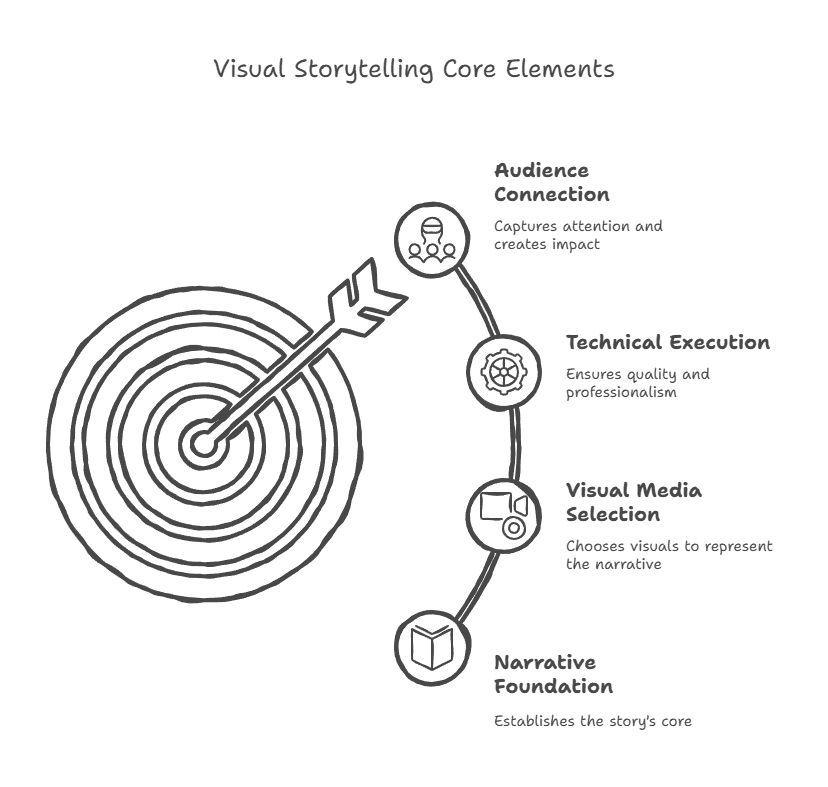
- The Narrative Foundation: Every visual story starts with a story. Ask yourself: what makes it memorable or, at least recognisable? Define the core conflict, journey, or insight you want to share.
- Visual Media Selection: This is the execution phase, involving the selection or creation of visual elements like photos, graphics, or videos that best represent each part of your narrative.
- Technical Execution: The impact of your story depends on the technical skills of the people involved. This includes photography, graphic design, video editing, and data visualization expertise.
- Audience Connection: The ultimate goal is to capture the attention of the audience and forge an emotional or intellectual connection, making your message stick.
Practical Applications and Examples
Visual storytelling isn't confined to advertising; it's a versatile tool across functions.
- Marketing & Sales: Use infographics to explain product benefits, customer testimonial videos to build trust, or illustrated case studies to showcase success.
- Project & Product Management: Employ journey maps to visualize user experience, timeline graphics to track project milestones, or concept diagrams to explain system architectures.
- Education & Training: Create animated explainer videos for complex topics, use flowcharts to break down processes, or build interactive modules for better engagement.
- Data Analysis & Reporting: Transform spreadsheets into compelling data visualizations and dashboards that tell the story behind the numbers, highlighting trends and insights at a glance.
For structured planning of any project, including a visual storytelling campaign, tools like the Project Planner can help you define goals, resources, and timelines visually.
How to Get Started with Visual Storytelling
Beginning your visual storytelling journey involves shifting your mindset from writing a report to directing a scene.
- Start with Your Core Message: Before choosing a single image, be crystal clear on the one thing you want your audience to remember. This is your story's anchor.
- Map the Story Arc: Outline a beginning (setup and context), middle (challenge or insight), and end (resolution or call to action). This structure provides a roadmap for your visuals.
- Choose Visuals Strategically: Match the visual medium to the message. Use a video for emotion and demonstration, an infographic for data comparison, or a photograph for authenticity and setting.
- Prioritize Clarity Over Complexity: A simple, powerful image is more effective than a cluttered, confusing one. The visual should illuminate the point, not obscure it.
- Iterate and Gather Feedback: Share your visual story with colleagues. Does it communicate what you intended? Use their feedback to refine both the narrative and the visuals.
For professionals who think visually, organizing these steps is crucial. ClipMind is designed to help you brainstorm, structure, and connect the elements of your visual narrative in a flexible mind map format, turning scattered ideas into a coherent story.
Visual storytelling is an essential skill in our increasingly visual digital landscape. By learning to communicate with images, charts, and videos, you can make your ideas more impactful, your data more understandable, and your messages more memorable. It's not about replacing text, but about using the right combination of media to tell a better, more engaging story.