What is an Email Marketing Funnel? A Guide for Marketers
Learn what an email marketing funnel is, its key stages from awareness to retention, and how to build one that drives conversions and customer loyalty.
What is an Email Marketing Funnel?
An email marketing funnel is a strategic framework for structuring email campaigns to guide potential customers through each stage of their journey with your brand. It is more than just a series of emails; it's a content strategy that follows the sales funnel structure to inspire relevant messaging. Think of it as a map for moving subscribers from being unaware of your brand to becoming loyal, repeat customers. A well-executed funnel creates a personalized customer journey that maximizes ROI by delivering the right message at the right time.
At its core, an email funnel is an email sequence that moves subscribers from potential to paying customers through nurturing and strategic guidance. This process supports subscribers through every stage, continuing even after they make a purchase to foster loyalty and repeat business.
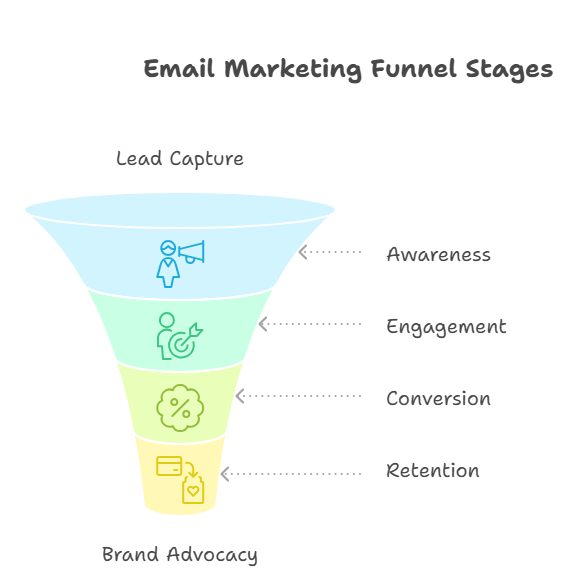
The Core Stages of an Email Marketing Funnel
A standard email marketing funnel aligns with the classic marketing funnel but is executed entirely through email communication. The primary goal is to guide subscribers through the email customer journey—from prospect to loyal advocate.
1. Awareness (Top of Funnel)
This is the introduction phase. You capture a lead's email address and begin introducing them to your brand, its values, and how you can address their needs. Content at this stage is educational and focused on building trust, not making a direct sale. Welcome email sequences are a prime example.
2. Engagement and Consideration (Middle of Funnel)
Here, you demonstrate your expertise and the specific value of your solution. You're showing subscribers how you can solve their pain points. Content becomes more targeted, often based on subscriber behavior like website visits or content downloads. This stage is about nurturing the relationship and stacking up value as to why a subscriber should consider buying from you. An email highlighting a new feature or integration can be the final nudge a prospect needs.
3. Conversion (Bottom of Funnel)
This is where potential customers are primed to make a purchase. Emails become more promotional, offering special discounts, limited-time offers, or compelling case studies. The conversion stage leverages urgency and clear calls-to-action to turn engaged leads into paying customers.
4. Retention and Loyalty (Post-Purchase)
The journey doesn't end at the sale. A sophisticated funnel actively works to retain customers. This includes onboarding sequences, satisfaction surveys, and exclusive offers for existing customers. Brands like Jones Road Beauty excel here, where churn risks receive personalized emails from leadership asking how to improve their experience. The goal is to encourage repeat purchases and turn customers into brand advocates.
Planning a multi-stage campaign like this requires clear visualization of goals and content flow. Using a tool like the Project Planner from ClipMind can help you map out each phase of your funnel strategy effectively.
Why Your Business Needs an Email Funnel
Implementing a structured email marketing funnel transforms sporadic campaigns into a cohesive growth engine. It provides a framework to strategically structure email campaigns, ensuring no lead falls through the cracks. The benefits are clear:
- Personalized Customer Journeys: Automated, behavior-triggered emails make each subscriber feel understood.
- Higher Conversion Rates: By nurturing leads with relevant content, you gently guide them toward a purchase decision.
- Increased Customer Lifetime Value (LTV): Retention-focused emails keep your brand top-of-mind, driving repeat business.
- Maximized Marketing ROI: Efficient automation saves time and resources while delivering targeted messages that perform better.
Building Your First High-Converting Funnel
Starting an email funnel may seem complex, but you can break it down into manageable steps.
- Define Your Audience and Goals: Who are you talking to, and what action do you want them to take at each stage?
- Map the Content to Each Stage: Create a content calendar that addresses awareness, consideration, conversion, and retention needs.
- Set Up Automation Triggers: Use your email marketing platform to automate sends based on actions like sign-ups, purchases, or website activity. For instance, onboarding emails are great candidates for marketing automation.
- Create Cross-Sell and Retention Flows: Don't forget existing customers. Use personalized emails based on past purchases or browse abandonment flows to introduce complementary products.
- Test and Optimize: Continuously analyze open rates, click-through rates, and conversion metrics. A/B test subject lines, content, and send times to improve performance.
For marketers and product managers, analyzing the competitive landscape and your internal strengths is crucial before launching any major campaign. Tools like the AI Competitor Analyzer and AI SWOT Analyzer can provide valuable strategic insights to inform your funnel design.
An email marketing funnel is the backbone of a modern, relationship-driven marketing strategy. It’s the systematic process of using emails that are both educational and promotional to build trust, demonstrate value, and drive sustainable growth. By understanding and implementing its stages—awareness, engagement, conversion, and retention—you can create a predictable pipeline for acquiring and keeping valuable customers.