What is Product Positioning? Definition and Strategy Guide
Learn what product positioning is, why it matters for your business, and how to create an effective positioning strategy that resonates with your target audience.
What is Product Positioning?
Product positioning is the strategic process of creating a distinct identity for your product or service in the minds of target customers. It's about deciding and communicating how you want your market to think and feel about what you offer. Essentially, positioning defines where your product fits in the marketplace and why customers should choose it over alternatives.
At its core, product positioning answers a fundamental question: how your product can solve customer problems better than competing solutions. This strategic foundation influences everything from marketing messages to product development decisions.
Why Product Positioning Matters
Effective positioning creates several critical business advantages that drive growth and customer loyalty.
Differentiation in crowded markets - In today's competitive landscape, clear positioning helps your product stand out by highlighting what makes it unique. Without distinct positioning, products often get lost in the noise and struggle to capture market attention.
Customer connection and loyalty - When positioning aligns with customer needs and values, it creates stronger emotional connections. Customers who understand exactly how your product serves them are more likely to become loyal advocates and repeat buyers.
Strategic alignment across teams - A well-defined positioning statement ensures everyone in your organization - from product development to sales and marketing - understands what makes your product special and communicates it consistently.
Key Elements of Effective Positioning
Successful product positioning requires careful consideration of several interconnected components that shape how customers perceive your offering.
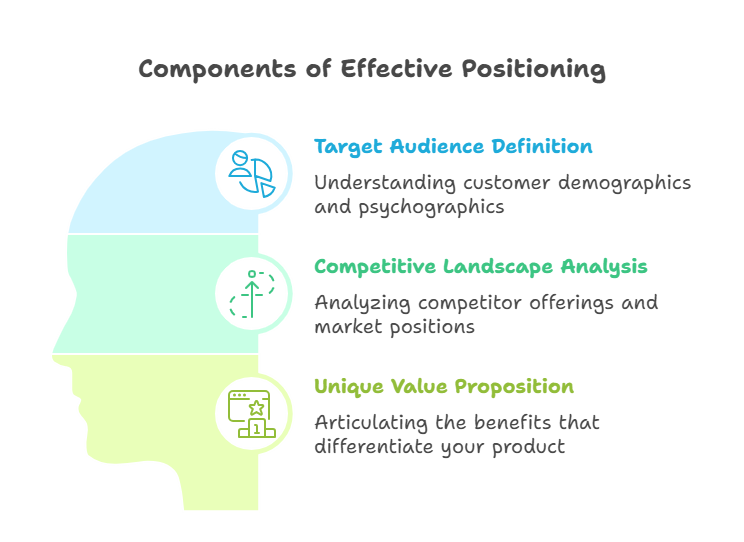
Target Audience Definition
Your positioning must speak directly to the specific customers you want to reach. Understanding their demographics, psychographics, pain points, and aspirations is essential for crafting messages that resonate. Without this clarity, positioning statements often become too generic to capture attention.
Competitive Landscape Analysis
You need thorough knowledge of what products or services competitors offer and their market positions. This analysis reveals gaps in the market that your product can fill and helps you identify what truly sets your solution apart from existing alternatives.
Unique Value Proposition
Your positioning should clearly articulate why customers should choose your product. This goes beyond features to focus on the specific benefits and outcomes that matter most to your target audience. The strongest value propositions address customer pain points that competitors overlook or solve inadequately.
Common Positioning Strategies
Different market situations call for different positioning approaches. Understanding these strategies helps you choose the right angle for your product.
Price-based positioning - This approach positions your product as the most affordable option or as offering the best value for money. While effective for budget-conscious markets, it requires careful execution to avoid perceptions of low quality.
Quality or prestige positioning - Some products succeed by positioning themselves as premium options with superior quality, features, or brand reputation. This strategy often targets customers willing to pay more for perceived excellence or status.
Benefit or solution positioning - This focuses on the specific problems your product solves or the outcomes it delivers. By emphasizing tangible benefits rather than features, this approach often creates stronger emotional connections with customers.
Lifestyle or values positioning - Some brands position themselves around particular lifestyles, values, or identities that resonate with their target audience. This approach works particularly well when customers make purchasing decisions based on alignment with their personal identity or beliefs.
Creating Your Positioning Statement
A positioning statement serves as an internal guide that keeps your team aligned on how to present your product to the market. While not meant for external marketing, it provides crucial direction for all customer-facing activities.
Your positioning statement should clearly define:
- Who your target customers are
- What category your product belongs to
- The key benefit or point of differentiation
- Why customers should believe your claims
The statement should be specific enough to guide decision-making but flexible enough to accommodate different marketing channels and customer segments. Many teams revisit and refine their positioning statements as market conditions evolve and they gather more customer feedback.
Avoiding Common Positioning Pitfalls
Even well-intentioned positioning efforts can fail if they fall into common traps that undermine their effectiveness.
Marketing myopia - Theodore Levitt coined this term to describe the tendency for businesses to focus too much on selling products rather than understanding consumer needs. Effective positioning starts with customer problems, not product features.
Overpromising and underdelivering - Positioning that creates unrealistic expectations inevitably leads to disappointed customers and damaged reputation. Your positioning should accurately reflect what your product actually delivers.
Ignoring market feedback - Positioning isn't a one-time exercise. Markets evolve, competitors adapt, and customer preferences change. Regularly testing your positioning with real customers helps ensure it remains relevant and effective.
Tools to Support Your Positioning Strategy
Developing strong product positioning requires analyzing multiple factors and organizing complex information. ClipMind offers several free AI tools that can help streamline this process.
The AI Competitor Analyzer helps you systematically evaluate competing products and identify positioning opportunities. For understanding broader market context, the AI PESTEL Analyzer examines external factors that might influence your positioning strategy.
When you're ready to visualize how all positioning elements connect, creating a mind map can help you see relationships between target customers, competitive advantages, and key messaging points more clearly.
Effective product positioning isn't about inventing qualities your product lacks - it's about authentically communicating the value you genuinely provide in a way that resonates with the right customers. When done well, it becomes the foundation for sustainable growth and customer loyalty.