What Is Lean Product Management? Build Better Products Faster
Learn how lean product management helps teams deliver value faster by minimizing waste, using customer feedback, and focusing on what matters most.
What Is Lean Product Management?
Lean product management is a customer-focused methodology that helps product teams deliver value faster by eliminating waste and focusing on what truly matters. Unlike traditional approaches with lengthy development cycles, lean product management emphasizes smaller, impactful iterations that provide immediate value to users while continuously incorporating real customer feedback.
This approach applies lean principles to the digital product development lifecycle, helping organizations build better products faster by trimming excess and maintaining agility throughout the product lifecycle.
Core Principles of Lean Product Management
Focus on Value Creation
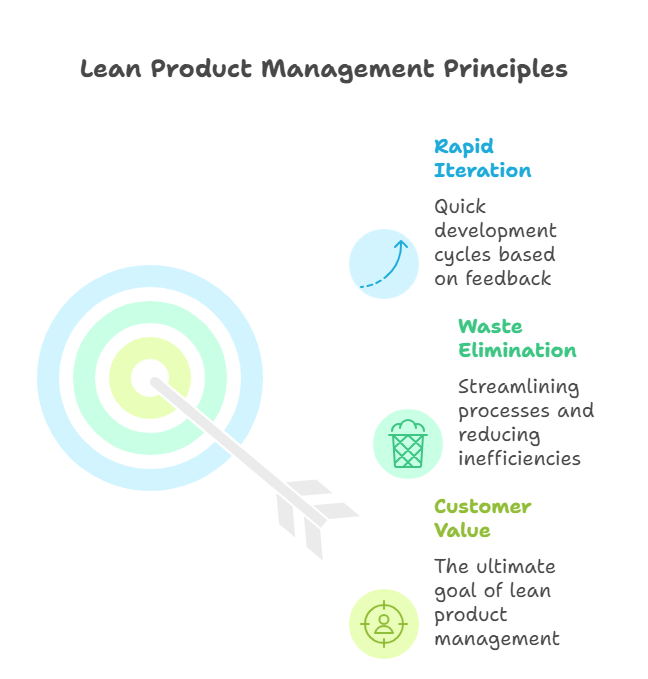
The foundation of lean product management is creating maximum customer value with minimal resources. This means prioritizing features and improvements that directly address user needs rather than building exhaustive feature lists. By concentrating on what delivers real value, teams can avoid wasting time and resources on unnecessary functionality.
Eliminate Waste
Lean product management helps product managers eliminate waste of time, resources, and efforts. This includes reducing unnecessary meetings, documentation, features that customers don't use, and any activity that doesn't contribute to delivering customer value. The goal is to streamline processes and focus only on what moves the product forward.
Iterate Quickly Based on Feedback
Instead of long development cycles, lean product management operates through rapid iterations informed by continuous customer feedback. This approach allows teams to bring products to market quickly and make adjustments based on real user data rather than assumptions.
How to Apply Lean Product Management
Start with Customer Discovery
Begin by deeply understanding your target customers and their pain points. Conduct interviews, surveys, and usability tests to gather insights about what users truly need. This customer-centric approach ensures you're building solutions for real problems rather than hypothetical scenarios.
Build Minimum Viable Products (MVPs)
Develop products or features that focus on delivering the main value quickly. Create minimum viable products that include only the essential features needed to solve the core problem. This allows you to test your assumptions with real users before investing significant resources.
Measure and Learn
Implement metrics to track how customers interact with your product. Use quantitative data (analytics) and qualitative feedback (user interviews) to understand what's working and what needs improvement. This data-driven approach ensures your decisions are based on evidence rather than intuition.
Pivot or Persevere
Based on your learnings, decide whether to pivot (change direction) or persevere (continue with your current approach). This iterative cycle of building, measuring, and learning forms the core of lean product management and enables continuous improvement.
Benefits of Lean Product Management
- Faster time to market by focusing on essential features
- Reduced risk through continuous validation with real users
- Higher customer satisfaction by building what users actually want
- Improved resource allocation by eliminating wasteful activities
- Greater adaptability to changing market conditions and user needs
Tools for Implementing Lean Practices
Successful lean product management requires the right tools to organize customer insights, track experiments, and visualize your product strategy. ClipMind offers AI-powered mind mapping tools that help product managers structure their lean experiments and customer feedback in visual formats.
For product managers looking to apply lean principles to strategic planning, ClipMind's free AI tools include frameworks like the AI SWOT Analyzer and Product Idea Brainstormer that align perfectly with lean methodology.
Getting Started with Lean Product Management
Implementing lean product management begins with a mindset shift toward continuous learning and customer-centricity. Start small by identifying one area of waste in your current process and experimenting with a lean approach. Remember that the goal isn't perfection but continuous improvement through rapid iteration and customer validation.
By focusing on delivering value, minimizing waste, and leveraging customer feedback, product teams can ensure effective product lifecycle management and market success while building products that customers truly love.