What is Influencer Marketing? A 2026 Strategy Guide
Learn what influencer marketing is, how it works, and how to build a successful strategy to reach your target audience and scale brand awareness.
What is Influencer Marketing?
Influencer marketing is a modern social media marketing approach where brands collaborate with individuals who have a dedicated and engaged following to promote products or services. At its core, it's a collaboration between popular social-media users and brands. This strategy takes the traditional concept of celebrity endorsement and adapts it for a digital, content-driven world, leveraging the trust and authority influencers have built with their audience.
The primary goal is to increase brand exposure by tapping into an influencer's community. It works because it feels less like a direct advertisement and more like a trusted recommendation from a peer or expert. This form of marketing uses endorsements and product mentions from influencers to drive brand awareness, consideration, and conversions in a way that feels authentic to the audience.
How Influencer Marketing Works
The process moves beyond a simple transaction to a strategic partnership. Success hinges on aligning your brand with the right creator whose audience matches your target market.
- Identification and Outreach: The first step is to find influencers whose followers align with your niche. This involves analyzing not just follower count, but engagement rates, content quality, and audience demographics.
- Campaign Collaboration: Once a partner is identified, you co-create a campaign. This could involve sponsored posts, product reviews, giveaways, or challenges and branded hashtags that encourage user-generated content.
- Content Creation and Distribution: The influencer creates content that features your product in an organic way, sharing it across their social channels like Instagram, TikTok, or YouTube.
- Performance Tracking: Brands then measure the campaign's impact through metrics like reach, engagement, website clicks, and sales conversions to evaluate ROI.
Key Benefits for Brands
Why has this become a cornerstone of modern marketing? The benefits are tangible and directly address core business objectives.
- Reach Targeted Audiences: It allows you to reach your target audience with precision by partnering with influencers in specific niches, from sustainable fashion to tech gadgets.
- Build Authenticity and Trust: Recommendations from a trusted voice carry more weight than traditional ads, lending credibility and social proof to your brand.
- Drive Engagement and Conversions: Influencer content typically generates higher engagement rates, which can translate into clicks, sign-ups, and sales.
- Scale Brand Awareness Quickly: Collaborating with macro-influencers is ideal for campaigns aimed at scaling brand awareness quickly, providing a significant boost in visibility.
Types of Influencers
Not all influencers are the same. They are typically categorized by their follower count, which correlates with their reach, niche focus, and engagement style. Choosing the right tier depends on your campaign goals and budget.
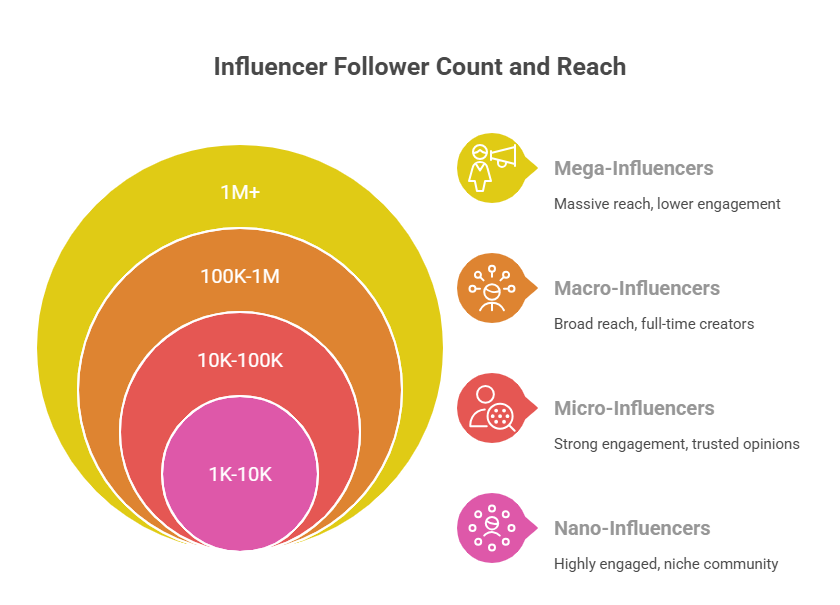
- Nano-Influencers (1K-10K followers): Have a small but highly engaged, niche community. Ideal for hyper-local campaigns or building genuine word-of-mouth.
- Micro-Influencers (10K-100K followers): Often seen as industry experts or passionate enthusiasts. They offer strong engagement and trusted opinions within a specific field.
- Macro-Influencers (100K-1M followers): Have broad reach and are often full-time content creators. They are effective for large-scale awareness campaigns.
- Mega-Influencers/Celebrities (1M+ followers): Offer massive reach but lower engagement rates. Best for major brand launches and reaching a mainstream audience.
Building a Successful Influencer Marketing Strategy
A successful campaign requires more than just finding someone with a large following. It demands a clear plan and continuous optimization.
Define Clear Goals
Start by outlining what you want to achieve. Common goals include increasing brand awareness, launching a new product, driving website traffic, or boosting sales. Your goals will dictate the type of influencer you partner with and how you measure success.
Find the Right Partners
This is the most critical step. Analyze potential influencers thoroughly. Do they create high-quality content? Does their audience demographic match your customer profile? Do they have an effective influencer marketing strategy for their own brand? Tools and platforms can help streamline this discovery and vetting process.
Foster Authentic Collaboration
Treat influencers as creative partners, not just billboards. Allow them creative freedom to present your product in a way that feels genuine to their audience. This authenticity is what drives engagement and trust.
Track and Measure Results
Use trackable links, promo codes, and social media analytics to monitor key performance indicators (KPIs). Analyze what worked and what didn't to refine your approach for future campaigns.
Planning a complex campaign with multiple influencers and deliverables can be challenging. Visualizing your strategy, from goal-setting to partner selection and content calendars, can bring much-needed clarity. ClipMind is an AI-powered platform that helps visual thinkers map out these strategies efficiently.
The Future of Influencer Marketing
As we look ahead, influencer marketing continues to evolve. We're seeing a shift towards long-term ambassador relationships over one-off posts, a greater emphasis on nano and micro-influencers for authenticity, and the integration of shoppable features and live streaming. The strategy remains a hybrid of old and new marketing tools, constantly adapting to new platforms and consumer behaviors. For brands willing to invest in genuine partnerships, it offers a powerful way to connect with audiences in a crowded digital landscape.