What is a Lead Magnet? A Guide for Marketers & Product Managers
Learn what a lead magnet is, see real-world examples, and discover how to create one that converts visitors into leads for your business.
What is a Lead Magnet?
A lead magnet is a marketing term for a free item or service given away to gather contact details. In simpler terms, it's a value exchange. You offer a potential customer something useful for free, and in return, they provide their email address or other contact information. This transforms an anonymous website visitor into a known lead you can nurture. As defined by Zendesk, it is a free asset or special deal offered in exchange for contact details.
Why Lead Magnets Are Essential for Growth
Lead magnets are a foundational tool for building an audience and a pipeline. They work because they solve a core problem for your audience upfront. According to Salesforce, a great lead magnet delivers value by solving a problem or "scratching an itch." This initial act of providing value builds trust and positions your brand as a helpful resource, not just a seller. For product managers and marketers, this is a critical step in moving users from awareness to consideration in the customer journey.
Common Types of Lead Magnets (With Examples)
The format of your lead magnet should match the information your audience seeks. Here are some of the most effective types, as highlighted across industry guides.
- Educational Content: This includes ebooks, whitepapers, checklists, and cheat sheets. For example, a project management software company might offer a "Project Launch Checklist."
- Interactive Tools & Resources: Templates, calculators, or swipe files provide immediate, practical value. A financial advisor could offer a "Retirement Savings Calculator."
- Exclusive Access: Webinars, video tutorials, or mini-courses offer deeper learning. Mailchimp notes that lead magnets can be tools or resources given for contact information.
- Discounts & Trials: A direct incentive like a discount code or a free trial period is a classic and effective magnet, especially in e-commerce.
How to Create an Effective Lead Magnet
Creating a lead magnet that converts requires strategy, not just creation. Follow this four-step framework to build one that attracts quality leads.
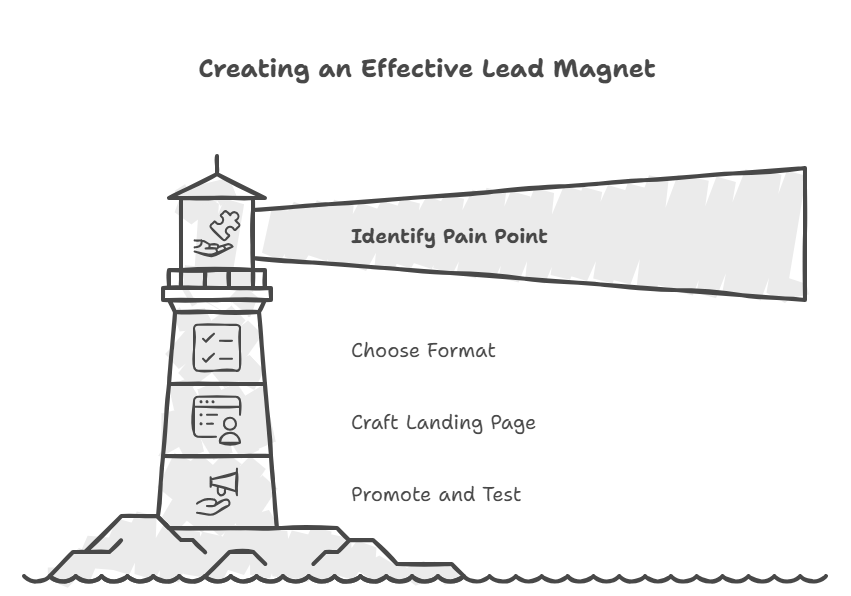
Step 1: Identify Your Target Audience's Pain Point
Your lead magnet must be highly relevant. Start by asking: What is the single biggest challenge my ideal customer faces right now? Your offer should provide a clear, quick solution to this specific problem. The Salesforce guide emphasizes that tailoring your magnet to your audience's specific needs sets you up for lead-generation success.
Step 2: Choose a High-Value, Low-Effort Format
The perceived value must be high, but the consumption effort should be low. A comprehensive 50-page ebook might seem valuable, but a busy professional is more likely to download and use a one-page template or a 5-point checklist. Leadpages describes it as an enticing offer designed to capture information. Think "quick win" for your audience.
Step 3: Craft a Compelling Landing Page
The landing page where users exchange their information is crucial. It must clearly communicate:
- The benefit: "Get our free template to streamline your workflow."
- What they get: A preview or bullet points of the contents.
- What you need: A simple, clean form (usually just name and email).
Step 4: Promote and Test Your Offer
Don't just let it sit on a page. Promote your lead magnet on social media, in blog posts, and through paid ads. Crucially, you should test different versions of your landing page or offer to see what resonates most with your audience and improves conversion rates.
Using Mind Maps to Plan Your Lead Magnet Strategy
Visual planning can dramatically improve your lead magnet strategy. A mind map helps you brainstorm audience pain points, map them to potential magnet formats, and outline the content structure. For instance, a central node of "Lead Magnet for New SaaS Product" can branch into "Audience Problems," "Content Ideas," "Promotion Channels," and "Success Metrics."
This visual approach ensures your offer is cohesive and targeted. You can use tools like the ClipMind AI Outline Maker to quickly structure your lead magnet content once your strategy is set.
Key Takeaways for Your Next Campaign
A lead magnet is more than a freebie; it's a strategic tool for audience building. Remember to focus on specific value for a specific audience. Choose a format that is easy to consume, promote it effectively, and always be testing to improve your results. By consistently offering value upfront, you build a list of engaged leads who are already interested in what you have to say and sell.