What is a Keyword Strategy? A Guide for SEO Success
Learn what a keyword strategy is, why it's essential for SEO, and how to build one to improve your content's visibility and connect with your target audience.
What is a Keyword Strategy?
A keyword strategy is a foundational plan for selecting and using specific search terms to improve your website's visibility in search engines like Google. At its core, it's a business's approach to using target search terms or phrases strategically throughout their content to align with common consumer queries. This process involves targeting the phrases and keywords used by your target audience to improve your content and rank higher in search engines. More than just a list of words, a keyword strategy is about how you want to target those keywords, now and in the future, containing every decision you take based upon your findings.
Think of it as your roadmap for being found online. Without a clear strategy, you're creating content in the dark, hoping it resonates. With one, you're intentionally building a bridge between what people are searching for and the valuable information you provide.
Why a Keyword Strategy is Essential
A well-defined keyword strategy moves you from guessing to knowing. It ensures your content efforts are aligned with actual user demand, which is critical for several reasons.
- Drives Qualified Traffic: By targeting terms your audience uses, you attract visitors who are actively looking for your solutions, leading to higher engagement and conversion rates.
- Improves Content Relevance: It forces you to structure your content around user intent, making it more useful and satisfying search engine algorithms.
- Provides a Competitive Edge: Analyzing the keyword landscape helps you identify opportunities your competitors may have missed, allowing you to capture untapped search traffic.
- Measures SEO Success: Your chosen keywords become the key performance indicators (KPIs) for your SEO efforts, allowing you to track rankings and progress over time.
The Core Components of a Keyword Strategy
Building an effective strategy involves more than picking popular words. According to experts, it's a plan that defines the search engine queries you want to rank for, how you’ll try to rank for them, and in what order. Let's break down the essential components.
Keyword Research and Selection
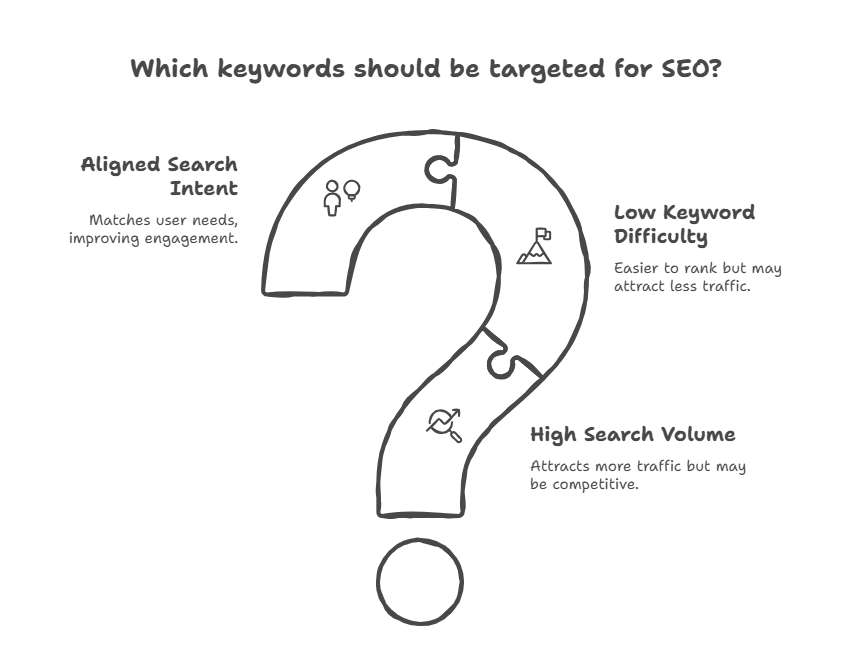
This is the discovery phase. You need to generate a comprehensive list of potential keywords related to your topic, product, or service. Tools can analyze your target page and the top 10 results for each keyword to provide insights. Key metrics to evaluate include:
- Search Volume: The average number of monthly searches for a term.
- Keyword Difficulty: A measure of how challenging it will be to rank for that term.
- Search Intent: The underlying goal of the user's query (informational, commercial, navigational, or transactional).
Keyword Clustering and Mapping
Once you have a list, the next step is to create keyword clusters. These are groups of search terms that share the same search intent and can be logically targeted within the same page or piece of content. This approach helps you see the overall search intent, search volume, and keyword difficulty for an entire group, allowing you to build comprehensive, topic-focused content rather than chasing individual keywords.
Analyzing the Search Landscape
The search landscape refers to the search engine results page (SERP) composition for a keyword. Before creating content, you must understand what's already ranking. Are the top results blog posts, product pages, or videos? This analysis tells you what type of content you need to create to compete effectively.
How to Build Your Keyword Strategy
Creating a strategy is a systematic process. Here is a simplified framework to get you started, based on common expert recommendations.
- Define Your Goals: What do you want to achieve? Brand awareness, lead generation, or direct sales? Your goals will influence the types of keywords you target.
- Understand Your Audience: Brainstorm the questions, problems, and phrases your ideal customer uses. What words would they type into Google?
- Conduct Comprehensive Research: Use tools to expand your list. Look for untapped keywords that your competitors rank for but you don't. This is a prime opportunity.
- Analyze Intent and Cluster Keywords: Group keywords by shared user intent. Map each cluster to a specific page on your website.
- Prioritize and Create a Plan: Decide which keyword clusters to tackle first based on opportunity, relevance, and resources. Create a content calendar.
- Implement, Track, and Refine: Create your content, optimize it for your target keywords, and use tracking tools to monitor where you rank. Your strategy should evolve based on performance data.
Structuring this plan visually can dramatically improve your execution. Using a mind map to connect your core topics to keyword clusters and content ideas helps ensure nothing falls through the cracks.
Tools and Mind Mapping for Success
Executing a keyword strategy requires the right tools for research and organization. SEO platforms offer features for tracking rankings and analyzing competitors. For the strategic planning phase, a visual approach is incredibly powerful.
Mind mapping allows you to visually organize your core business topics, branch out into main keyword categories, and further expand into specific long-tail variations and content ideas. This method provides a clear, overarching view of your entire SEO content ecosystem, making it easier to identify gaps and connections.
To jumpstart your research, consider using AI-powered tools. For example, you can use the SEO Keywords Brainstormer to generate a foundational list of terms based on your seed topics.
A keyword strategy is not a one-time task but an ongoing cycle of research, creation, and optimization. By understanding what your audience is searching for and systematically creating content to meet that need, you build a sustainable foundation for organic growth. Start by defining your goals, researching diligently, and organizing your plan clearly—your future search visibility depends on it.