What is the 4Ps Marketing Mix? A Complete Guide
Learn about the 4Ps marketing mix framework - product, price, place, and promotion - and how to use this strategic tool to develop effective marketing strategies.
What is the 4Ps Marketing Mix?
The 4Ps marketing mix is a foundational framework that helps businesses develop comprehensive marketing strategies. Also known as the marketing mix, this concept refers to four key elements: product, price, place, and promotion. These elements represent the essential factors businesses must consider when bringing a product or service to market.
Originally developed in the 1960s, the 4Ps framework provides a structured approach to marketing planning. It helps ensure that all critical aspects of bringing a product to consumers are considered and optimized. The framework can be expanded to seven Ps for service-based businesses by adding people, process, and physical evidence, but the core four Ps remain the most widely used model for product marketing.
The Four P's Explained
Product
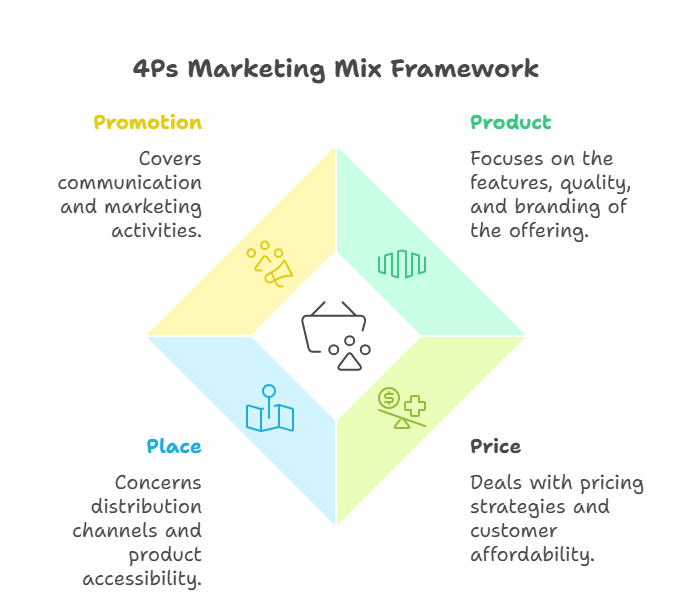
The product element refers to what you're selling - whether it's a physical good, service, or digital product. This includes all aspects of the offering: features, quality, design, branding, packaging, and any associated services. When evaluating your product, consider what makes it unique and how it solves customer problems or meets their needs.
Key product considerations include:
- What customer needs does your product address?
- What features and benefits differentiate it from competitors?
- How does your product's quality and design align with your target market?
- What is your product's lifecycle stage?
Price
Price encompasses all decisions related to what customers pay for your product. This includes not just the initial cost, but also discounts, payment terms, credit options, and perceived value. Setting the right price requires balancing customer affordability with business profitability while considering market conditions and competitor pricing.
Important pricing factors include:
- Setting a price that reflects current market trends and customer expectations
- Determining your pricing strategy (premium, penetration, value-based)
- Considering psychological pricing and perceived value
- Aligning price with your overall business objectives
Place
Place refers to where and how customers can access your product. This includes distribution channels, logistics, inventory management, and physical or digital locations where your product is sold. The goal is to make your product available where your target customers naturally shop or seek solutions.
Place considerations involve:
- Identifying the best place to market and sell your product
- Choosing between direct and indirect distribution channels
- Managing inventory and supply chain logistics
- Optimizing for online vs. offline presence based on customer behavior
Promotion
Promotion covers all communication and marketing activities that inform customers about your product and persuade them to purchase. This includes advertising, public relations, sales promotions, social media marketing, and personal selling. Effective promotion ensures your target audience knows about your product and understands its value.
Promotion strategies include:
- Developing integrated marketing communications
- Choosing the right promotional mix for your audience
- Creating compelling messaging that highlights product benefits
- Timing promotions to maximize impact and reach
How to Apply the 4Ps Framework
Applying the 4Ps framework requires careful analysis and strategic thinking across all four elements. Start by thoroughly understanding each component and how they interact with one another. The framework works best when all four Ps are aligned and support each other toward common business objectives.
For example, a premium product should have premium pricing, be available in appropriate distribution channels, and be promoted with messaging that emphasizes quality and exclusivity. Similarly, a value-priced product needs mass distribution and promotional messaging that highlights affordability and practical benefits.
Benefits of Using the 4Ps Framework
The 4Ps marketing mix offers several significant advantages for businesses developing marketing strategies. It provides a comprehensive framework that ensures no critical marketing element is overlooked. By systematically addressing product, price, place, and promotion, businesses can create cohesive strategies that align with their overall objectives.
Additional benefits include:
- Strategic clarity in marketing planning and execution
- Better resource allocation across marketing activities
- Improved coordination between different marketing functions
- Enhanced ability to adapt to market changes and customer feedback
Modern Applications and Considerations
While the 4Ps framework remains highly relevant, modern marketers often adapt it to account for digital transformation and changing consumer behaviors. Digital channels have transformed how we think about place (online marketplaces, social commerce) and promotion (content marketing, influencer partnerships).
Today's marketers also consider additional factors like customer experience, data analytics, and sustainability within the 4Ps framework. The core principles remain valuable, but their application continues to evolve with technological advancements and shifting market dynamics.
Creating Your Marketing Mix Strategy
Developing an effective marketing mix requires research, analysis, and continuous refinement. Start by gathering data about your target market, competitors, and industry trends. Use this information to make informed decisions about each of the four Ps, ensuring they work together harmoniously.
Remember that your marketing mix isn't static - it should evolve as market conditions change, customer preferences shift, and your business grows. Regular review and adjustment of your 4Ps strategy will help maintain its effectiveness over time.