How to Build a Social Media Strategy: A 7-Step Guide for 2025
Learn how to build a winning social media strategy in 7 actionable steps. From setting goals to measuring ROI, this guide helps marketers and creators plan effectively.
What is a Social Media Strategy?
A social media strategy is a structured plan that outlines your marketing goals, the tactics you will use to achieve them, and the metrics you will track to measure success. It moves you beyond random posting and aligns every action with your business objectives. As experts note, without clear goals, social media managers struggle to know what to prioritize or how to measure progress. A defined strategy ensures you focus your time and resources on platforms where your audience is actually active, rather than trying to be everywhere at once.
Step 1: Conduct a Social Media Audit
Before you plan the future, you must understand your current state. A social media audit involves a thorough review of all your profiles, content performance, and audience engagement. This process helps you identify what's working, what isn't, and where there are gaps in your scheduling or content mix. According to the American Marketing Association, learning how to audit your social media marketing is a foundational skill for continuous improvement. It allows you to evaluate your content output and refine your calendar based on real performance data.
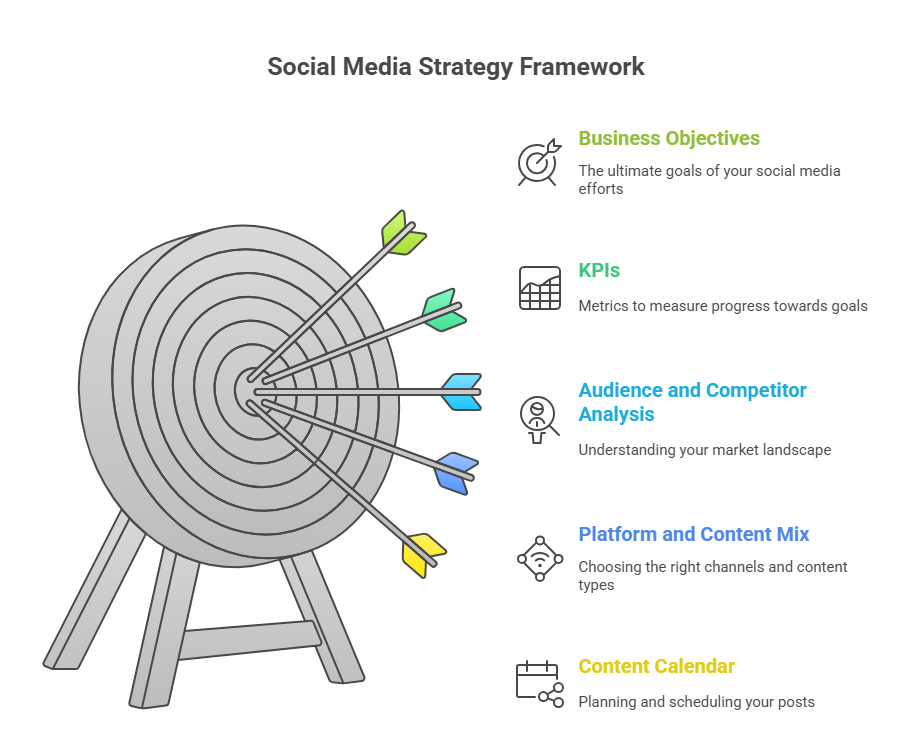
Step 2: Define Clear Goals and KPIs
Your strategy must be built on specific, measurable goals. Are you aiming for brand awareness, community engagement, lead generation, or direct sales? Each goal requires different tactics and content. Once your goals are set, define the Key Performance Indicators (KPIs) you will track. Common KPIs include reach, engagement rate, click-through rate, and conversion rate. As noted in industry discussions, having a clear roadmap of goals and KPIs is essential for knowing what to prioritize and how to convey progress to stakeholders.
Step 3: Know Your Audience and Competitors
Understanding where your target audience spends their time online is non-negotiable. Research their demographics, interests, and which platforms they prefer. Simultaneously, analyze your competitors' social media presence. What platforms are they on? What type of content resonates with their followers? This dual analysis, as highlighted in marketing guides, informs which social media channels you should focus your efforts on, ensuring you invest resources wisely.
Step 4: Choose Your Platforms and Content Mix
You do not need to be on every platform. Select two to three networks where your audience is most active and where your content format aligns naturally. Then, plan a balanced content mix. This typically includes a blend of educational, entertaining, inspirational, and promotional posts. The best strategies avoid being one-note and instead keep audiences engaged with variety. If you're starting from scratch, you'll need to test and learn what posting frequency works best for each network.
Step 5: Create a Content Calendar
A content calendar is the operational backbone of your strategy. It helps you plan posts in advance, maintain a consistent posting schedule, and ensure your content mix is balanced across weeks and months. It also allows for strategic planning around campaigns, product launches, and holidays. Using a visual tool like a mind map can be incredibly effective for brainstorming campaign themes and visualizing how different content pieces connect.
Step 6: Engage and Build Community
Social media is a two-way street. Your strategy must include a plan for consistent audience engagement. This means responding to comments and messages, participating in relevant conversations, and proactively engaging with followers' content. Community building turns passive followers into active brand advocates. As simple Reddit advice summarizes, effective management involves planning your posts and engaging with followers.
Step 7: Analyze, Report, and Iterate
Your work isn't done once content is published. Regularly analyze your performance against the KPIs you set. Use platform analytics and social media management tools to gather data. Create reports that show what's driving value, such as engagement or conversions. This analysis is not just for reporting upwards; it's the critical feedback loop that allows you to refine and optimize your strategy continuously. Prove the ROI of your efforts by tying social media activities directly to business outcomes.
Building a social media strategy is an iterative process. Start with these seven steps, implement your plan, measure the results, and be prepared to adapt. A structured approach turns social media from a time-consuming chore into a powerful driver of business growth.