B2B vs B2C Marketing: Key Differences and Strategies
Understand the core differences between B2B and B2C marketing, from audience and sales cycles to messaging and relationship building.
What is B2B and B2C Marketing?
At its core, the difference is in the customer. B2B (Business-to-Business) marketing involves selling products or services to other companies. Think of a software company selling project management tools to a marketing agency. B2C (Business-to-Consumer) marketing targets individual consumers for personal use, like a clothing brand selling directly to shoppers online B2B means 'business to business'.
While both aim to drive sales, the strategies, customer journeys, and communication styles diverge significantly. Understanding these differences is crucial for crafting effective campaigns, whether you're a product manager launching a new service or a marketer allocating your budget.
5 Key Differences Between B2B and B2C Marketing
The divergence between these two models shapes every aspect of a marketing plan. Here are the five fundamental areas where B2B and B2C strategies part ways.
1. Target Audience and Buying Motives
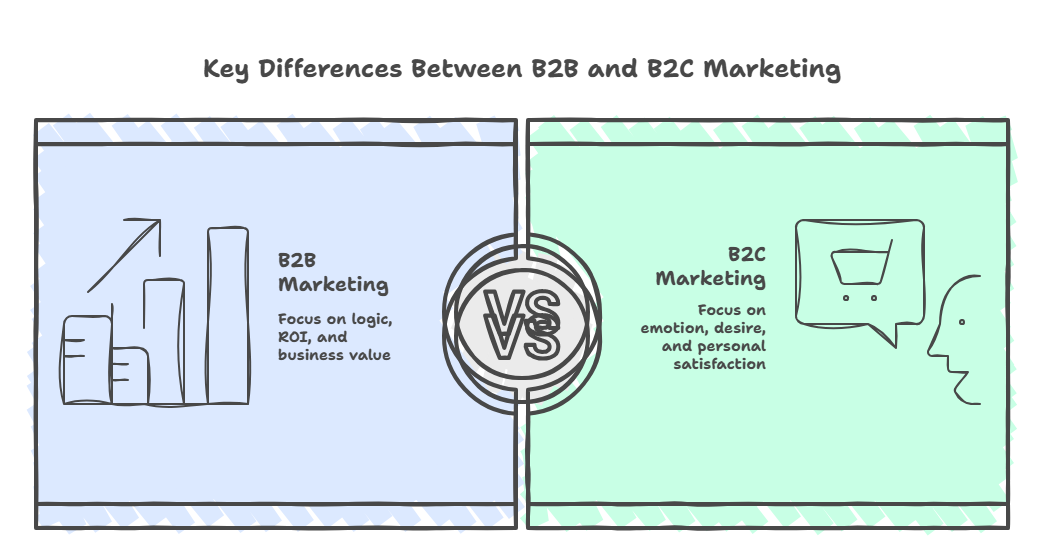
The buying motive is the primary differentiator. B2B purchases are driven by logic, ROI, and business value. A business buyer needs to justify the purchase by how it improves efficiency, reduces costs, or increases revenue for their company. The messaging must clearly demonstrate how their product or service benefits the customer.
In contrast, B2C purchases are often driven by emotion, desire, and personal satisfaction. A consumer might buy a new phone for its status, a dress for the joy it brings, or a snack to satisfy a craving. The decision is personal and can be impulsive.
2. The Complexity of the Sales Cycle
B2B sales cycles are notoriously longer and more complex. They often involve multiple stakeholders—from end-users and managers to finance and C-suite executives. Each needs to be convinced, leading to a process that requires nurturing, detailed proposals, and contract negotiations. This demands a longer sales process and ROI-driven messaging.
B2C sales cycles are typically shorter and more direct. A consumer sees an ad, visits a website, and makes a purchase, often within the same session. The path from awareness to decision is swift, catering to quick solutions for more immediate needs.
3. Transaction Value and Relationship Focus
B2B transactions usually involve larger quantities of goods, higher sales prices, and higher-value transactions. A single contract can be worth thousands or millions, justifying a significant investment in relationship building. B2B marketing focuses on building deep, personal relationships over time, often involving account managers and dedicated support.
B2C transactions are generally lower in individual value but higher in volume. The relationship is often more transactional, though brands work hard to build loyalty through excellent customer experience and community engagement.
4. Marketing Channels and Content Strategy
Your audience dictates where you find them. B2B marketing thrives on professional networks like LinkedIn, industry publications, and targeted email campaigns. Content is educational and detailed—think whitepapers, case studies, and webinars that establish authority and solve complex business problems.
B2C marketing dominates visually engaging, broad-reach platforms like Instagram, TikTok, and Facebook. Content is designed to entertain, inspire, and create an emotional connection quickly. Influencer partnerships and viral social media campaigns are common tactics.
5. Messaging and Communication Style
B2B messaging is rational, detailed, and benefit-oriented. It speaks the language of business, focusing on specifications, integration capabilities, and quantifiable outcomes. It's about providing the evidence a committee needs to approve a purchase.
B2C messaging is emotional, simple, and benefit-focused. It highlights how a product makes you feel, look, or live better. The language is conversational, and the value proposition is immediately clear.
Crafting Your Marketing Strategy
Choosing the right approach starts with a crystal-clear understanding of your customer. Are you solving a long-term business problem or a personal, immediate need? Map out the decision-making unit and their priorities.
For B2B, invest in a robust content strategy that nurtures leads through a lengthy funnel. For B2C, create memorable brand moments that drive impulse and loyalty. Many companies, especially SaaS platforms, operate a hybrid model, requiring tailored messaging for each segment.
Visualizing these strategic differences can clarify your path forward. Using a mind map to plot out audience personas, buying journeys, and key channels helps align your team.
The line between B2B and B2C can sometimes blur, but the core principles remain. B2B is about building partnerships and proving value to a business. B2C is about connecting with individuals and fulfilling a personal desire. By aligning your strategy with these fundamental truths, you can communicate more effectively and drive meaningful growth.